The Monsoon is just around the corner, bringing relief from the high temperatures but also inviting many unwanted guests into your house. Among numerous guests, the problem of mosquito infestation is rampant. The rainy season is the best time for mosquitoes to thrive. The condition becomes even more problematic during the monsoon, as almost all mosquito species require stagnant water to survive at the larval stage.
Almost every kind of mosquito can survive and breed in dry and wet conditions throughout the year. However, during the monsoon, the mosquito population grows drastically. Consequently, the season witnesses a sharp spike in the cases of Malaria, Zika, or Dengue Fever. In a nutshell, the risk of health disorders caused by mosquito bites also skyrockets.
How Can Mosquitoes Breed Indoors?
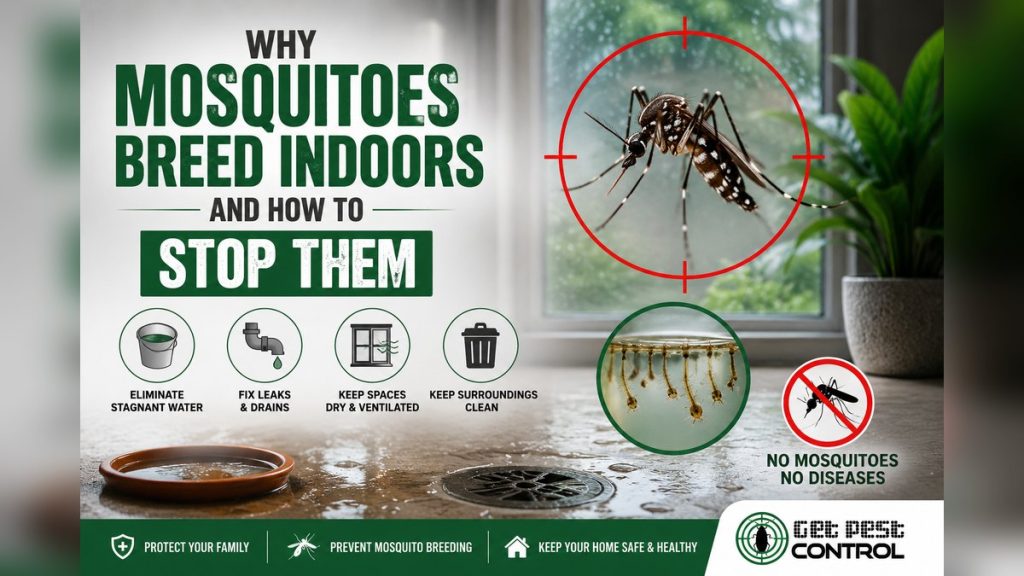
Mosquitoes can lay eggs in small sources of stagnant water, even in a small bottle cap of stagnant water. Usually, female mosquitoes enter indoors to feed on human blood. Once they are in, they also look for dark, humid, and less-used areas with standing water, such as AC drip pans, clogged drains, refrigerator trays, and pots on the balcony. Having such places of undisturbed stagnant water indoors has become a favourite breeding site for mosquitoes. With the increasing prevalence of mosquitoes inside houses, cases of mosquito-borne diseases are rising too. Therefore, it’s an alarming time to keep these deadly pests away from your home, protecting your children and elders from serious health disorders like Malaria, Dengue, Chikungunya, Zika, etc.
When do Mosquitoes Breed?
Like other pests, mosquitoes breed when conditions are favourable for their infestation. Generally, mosquitoes breed in stagnant or standing water. Monsoon is the time when rainwater collects in pits and puddles here and there, creating the most favourable conditions for mosquitoes to breed.
Life Cycle of Mosquitoes
The mosquito life cycle is divided into four different stages. Due to these stages, mosquitoes fall under the category of animals, as they undergo a complete metamorphosis.
The four stages of the mosquito life cycle are as follows:
- Egg
- Pupa
- Larvae
- Adult Mosquitoes
To undergo and complete these life cycle phases, mosquitoes need stagnant water. When female mosquitoes feed on mammalian blood, they can produce around 30-300 eggs at varying distances above the water surface.
Mosquitoes need standing water for reproduction. The female mosquito lays her eggs, individually or in attached groups, aka rafts. The eggs are placed either directly on the surface of still water along its edges or in areas with standing water collected by rain, irrigation, or flooding.
Egg
After each blood meal, female mosquitoes look for water sources to lay eggs. Generally, they lay over a hundred eggs within a few days. The way of laying eggs varies from one mosquito species to another. However, the most common species lay their eggs one by one or sometimes in groups. Only after 24-48 hours, the mosquito eggs hatch into larvae. However, hatching time may vary due to several factors, primarily the mosquito species and water temperature.
Larva
Larvae live almost exclusively in aquatic environments. They typically feed on any organic matter particles present in the water. They will moult 4 times, and during the moulting phases they grow 0.5-0.75 inches from the first to the fourth instar.
Pupa
It is the resting stage before turning into an adult mosquito. The pupa requires penetrating the water surface to breathe, as it breathes through respiratory trumpets. Depending on the temperature, the pupa develops into an adult mosquito within 1-4 days.
Adult
When the pupa’s development phase is completed, an adult mosquito emerges.
Preventing mosquito breeding is the most effective way to stop these deadly pests from affecting your health and that of your dear ones.
Tips to Prevent Indoor Mosquito Breeding
Empty the dustbin or Trash Can Regularly
Leaving dustbins or trash cans uncapped or half-capped is a clear invitation to mosquito breeding, especially if you don’t dispose of waste daily. Empty the trash can regularly; if that’s not possible, at least keep it fully capped. Wet waste, such as vegetable and fruit peels or leftovers, may cause pests like fruit flies and mosquitoes to thrive more quickly in such an environment.
Repair Leaking Pipes & Faucets
Leaky pipes and faucets are among the most common causes of pest infestations, including mosquitoes. Even a minor leak can lead to mosquito breeding. Correcting such leakages is essential to prevent pest infestations.
Ensure Good Ventilation in the Kitchen & Bathroom
Keeping your under-sink area in the kitchen and bathroom clean and dry is crucial. During the daytime or when not in use, you can keep your bathroom doors and windows open to reduce constant moisture. Doing so can significantly reduce indoor mosquito breeding.
Empty Bird Baths and Drinkers Regularly
Bird baths or drinking pots placed on your window or balcony should be regularly checked. Dry out or change the water in these drinkers daily to reduce the risk of mosquito breeding or other pest infestations. Leaving water in such pots may allow mosquitoes to multiply rapidly.
Maintain Clean, Dry & Clutter-Free Interiors
Dark, messy, or less exposed areas are the perfect hideouts and breeding grounds for mosquitoes. Keeping your home fully clutter-free, cleaning every corner, and drying wet places are ways to prevent or stop mosquito breeding inside your house.
What’s the Best Way to Cope With Indoor Mosquito Breeding?
Sometimes, these tiny enemies may bypass your prevention shield and breed in an area you haven’t even expected. In such a situation, prevention tips won’t help you as your house has already become a safe abode for them. It’s high time to seek help from a pest control expert to cope with mosquito breeding and set your home free from these tiny but dangerous pests. Rush to a professional mosquito control service-providing company immediately to avoid risks of severe mosquito-borne diseases.
Conclusion
Mosquitoes are small but one of the most dangerous pests found in or around your home. They can easily breed in stagnant water; even a small amount of water won’t hamper their breeding. And they feed on the blood of mammals, including humans. As a result, they enter your homes and may make them their permanent abode if no preventive and curative measures are taken. Follow preventive measures to keep mosquitoes away from your home. If you are afflicted with indoor mosquitoes, consulting a mosquito control expert can help.
Talk to a professional pest control expert today and say goodbye to mosquitoes.